
The 2026 Mary Parker Follett Conversation on Creative Democracy
November 2-4 2026 / Wylie Conference Center, Beverly, Massachusetts
Introduction
A century ago, Mary Parker Follett wrote and spoke with remarkable insight into human relations, organizational dynamics, and the reality and promise of democracy. Her ideas and advice were practical and pragmatic in that they were based on actual human experience in real situations, but they were also visionary and idealistic in challenging us to pursue the untapped potential for social creativity and democracy.
Since her time, Follett’s insights and ideas have had impacts in many fields, including business management, leadership, political science, and conflict resolution. Her principles remain the same across all disciplines: difference and diversity as a source of strength; the continuous evolution of situations and thus the need for continuous and creative evolution of relationships, understanding, ideas and strategies; and democracy as a way of life, among others.
Many have suggested that Follett was ahead of her time. We maintain that Follett was right on time—both for her time and for ours. Today, the promise of democracy as a way of life and as a creative experience seem as elusive as ever, yet the world is ever more interdependent and more people than ever seem to be ready for a conception of democracy that is authentic and meaningful, from the most intimate spaces of our lives through the global.
You are cordially invited to the 2026 Mary Parker Follett Conversation, which will take place November 2-4, 2026 at the Wylie Conference Center north of Boston. The overall guiding question for the event is:
How can we fulfill the promise of democracy as a creative experience, one that releases both personal and social potential, from the local to the global level?
This conference will bring together people from many disciplines whose approach to human relations, community building, public affairs and management are based on integrated diversity and creativity among people facing situations together. The team-based conversation format will provide an enriching, participatory experience that we expect will produce new insights, fresh initiatives, and impetus for action.
Team-Based Conversation Format
Unlike traditional conferences featuring panel discussions, workshops, or the presentation of papers, the Follett Conversation will use a team-based inquiry format that is intended to produce new insights and fresh initiatives for research and action. The format works as follows:
Before the Conversation event:
- Individuals or groups propose team inquiry themes. These proposals for teams will be publicized widely. Most teams will be proposed as being open to anyone to join, but you can propose a closed team.
- As participants commit to teams, the teams begin to self-organize as conference planning continues. Team members introduce each other via email and conference call, share readings chosen by the team organizer or team members, and exchange shorter input papers to prime their collaboration.
During the Conversation event, which is just over two days and two nights in length:
- Teams meet daily to collaborate on their inquiry.
- All Conversation attendees convene for breakfast, lunch, and dinner together.
- The Conversation will conclude with a plenary session at which teams present their findings.
- Team presentations can take a variety of forms—verbal, visual, artistic, participatory, etc.
Following the Conversation event:
- Teams create reports that are assembled into a Proceedings that is published online.
- Individual attendees can also publish output papers or reflections via the Proceedings (this can be important for academic credit).
- Teams may continue into subsequent annual or biennial Conversations, or they may exist for just one cycle.
This approach is proposed because it is participatory, supports integrating diversity, fosters greater mutual learning and the emergence of new insights and ideas, and builds long-lasting collaborative networks. As Follett pointed out, the root of the word “conference” is “to confer,” and we believe that the team-based conversation format allows for the greatest amount of conferring.
TEAMS
Participation in a team is required for attendance at the Follett Conversation. The teams listed below have drawn sufficient participation to move forward.
Team A: Integrative Activism
Team E: Conflict, Integration, and Democracy: Learning to Use Conflict to Make Democracy Work
Team F: Co-creative Democracy at Scale: How?
Team I/J: Envisioning a Follett Documentary and/or Stage Play.
Team L: Idealized Design of an Authentic and Powerful Civics Education Experience for K-12 Students
Full descriptions and contacts for each of the advancing teams are available here: 2026 Mary Parker Follett Conversation on Creative Democracy – Final Teams.
Some teams may still be accepting additional participants. Contact the team proponents for more information about each team that you may be interested in.
SCHEDULE
2025
Dec 15 Teams Announced / Call for Participants
2026
Feb-Oct Pre-Conference Collaboration (remote)
Jul 15 Registration Deadline
Nov 2-4 2026 Conversation at the Wylie Center. Begins with welcome lunch on Monday, Nov 2 and concludes at 3 PM on Wednesday, Nov 4 following the afternoon plenary session. Teams will convene Monday afternoon, all day Tuesday, and on Wednesday morning. Evenings will be open to informal social gatherings.
2027
Feb Team Reports & Individual Proceedings Submissions Due
Mar-Apr Proceedings Published
CONFERENCE VENUE
The Conversation will take place at the beautiful Wylie Center, which is located on Massachusetts’ North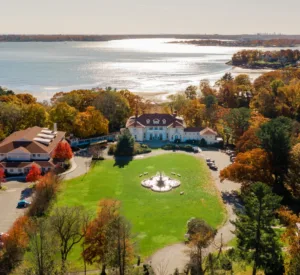 Shore at Endicott College. The Wylie Center is easily accessible from Boston and offers superb meeting spaces and on-site lodging and meals, supporting a collegial, intimate, and focused atmosphere for the Conversation.
Lodging
Lodging is on-site. For those who will be arriving in the area the night before, we have reserved ten additional rooms, which will be available on a first-come, first-serve basis.
Getting to the Wylie Center
- Car: The center is located about 50 minutes’ drive from downtown Boston and from Logan Airport.
- Train: MBTA Commuter Rail (Newburyport/Rockport Line) has a station in Beverly. Travel time is about 35-45 minutes from Boston’s North Station. From Beverly Station it’s an 8-minute ride (by taxi, rideshare, or conference helper) to the Wylie Center. There is also an express bus service from Logan Airport to nearby Danvers.
Contact Matthew Shapiro (mshapiro@follettfdn.org or (208) 246-9925) for any additional information and referral to team coordinators.
COST AND REGISTRATION
The all-in conference fee is $750 per person, which includes two nights’ lodging, all meals, and conference facilities. Teams have formed and some are still open to additional participants. Contact us at info@follettfdn.org or reach out directly to the team organizers named above for more information. Please use the form below or contact us to make alternative arrangements.
Notes: (1) The Givebutter platform makes card processing fees optional, so you can indicate on the form whether you want to include it. (2) Note that “tips” to Givebutter are also optional. (3) The conference fee itself is not a donation to the Foundation